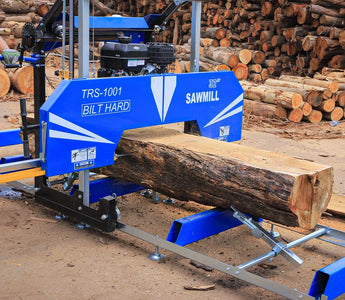
A sawmill is a powered machine that cuts whole logs into usable lumber. It can produce boards for a shed, wide slabs for furniture, or thick pieces for a home woodworking project. Sawmills range from compact machines used on private land to permanent facilities with several cutting stations. Understanding the machine and its limits helps a new user decide whether milling logs at home is practical.
What Is a Sawmill?
A sawmill is a powered machine that cuts whole logs lengthwise into boards, beams, slabs, or squared timber. Portable models usually hold one log on a steel bed while a powered saw head moves along a track, allowing the operator to produce lumber in selected dimensions.
The Core Parts of a Sawmill
Most sawmills are built around three essential systems: a cutting system, a stable log-support structure, and controls that position the blade or log.
The saw blade makes the cut, while the saw head carries the blade, guards, wheels, and drive components. The track and bed support the log, and clamps prevent it from rolling or shifting. Height controls and a thickness scale help the operator set each pass, while the engine or motor powers the blade.
What Does a Sawmill Do?
A sawmill keeps the log secured on the bed while the blade follows a controlled cutting path. The operator first adjusts the saw head to the required height and checks the clamps before starting each pass. The milling process then follows four basic stages:
-
Load and secure the log: Position the log on the bed and hold it in place with stops and clamps.
-
Create a flat surface: Remove the first rounded outer slab to establish a stable cutting face.
-
Square the log: Rotate the log and cut the remaining sides to form a cant.
-
Cut the lumber: Lower the saw head to the selected thickness and make repeated passes to produce boards, beams, or slabs.
After each cut, the saw head returns to the starting position and is lowered for the next pass. The finished pieces are rough-sawn lumber, which usually needs to be dried, planed, and trimmed before final use.

Produces Rough-Sawn Lumber to Size
A sawmill produces rough-sawn lumber based on the dimensions selected before each cut. The resulting pieces may be used for sheds, fencing, furniture, or other wood projects after suitable drying and preparation.
Freshly milled boards usually retain saw marks and moisture. Extra thickness may be added to allow for shrinkage, planing, and final sizing during later processing.
Creates Lumber for Different Projects
Depending on the log size and mill capacity, a sawmill can produce standard boards, structural beams, fence material, furniture blanks, or wide live-edge slabs. This flexibility allows operators to prepare dimensions that may be difficult to find in regular lumber stores.
What Are the Main Types of Sawmills?
The right mill depends on the largest log, the required board width, the available power, and the expected workload. When comparing portable sawmills, it should also consider how each log will be loaded and turned.
Portable Bandsaw Sawmills for On-Site Milling
A portable band mill moves a band saw head along a track. Its thin blade creates a relatively narrow kerf, which limits the amount of wood removed during each pass.
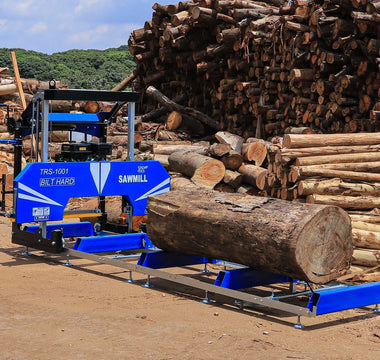
When logs need to be processed on a farm or private property, the BILT HARD 22" Portable Sawmill uses a 270cc 9 HP Ducar gasoline engine with recoil start. It handles logs up to 22 inches in diameter and 129 inches long, then cuts boards up to 20 inches wide and 6.3 inches thick. These limits cover many fence, shed, and small cabin projects.
Circular Blade Sawmills for Higher Output
A circular sawmill cuts with a rigid round blade. This blade design supports repeated cutting when the mill and log-handling system are prepared for steady production.
A circular blade can create a wider kerf than a thin band blade. Actual material loss depends on the blade specification and log size, so the kerf should be checked for the individual machine.
Swing-Blade Sawmills for Large Logs
A swing-blade mill uses a circular blade that pivots between horizontal and vertical positions. The two cuts meet and release a square-edged board. The log remains in place while the cutting unit changes direction. This reduces the need to roll a heavy trunk. Wide slabs normally require a separate slabbing attachment.
Chainsaw Sawmills for DIY and Remote Jobs
A chainsaw mill uses a frame attached to a chainsaw bar. The frame follows a straight first-cut rail, then uses the new flat surface to guide later passes.
The equipment can reach locations that are difficult to access with a tracked mill. Cutting is slower, and the chainsaw kerf removes more material. A suitable powerhead and ripping chain are important for sustained milling.
Stationary Sawmills for Commercial Production
A stationary mill combines several machines within a permanent processing site. Equipment may include a debarker, primary saw, resaw, edger, or grading station. Conveyors and powered handling systems move wood between operations. This layout supports continuous output but requires more space and infrastructure than a personal portable mill.
Who Should Use a Sawmill?
Owning a sawmill makes sense when usable logs are available regularly, and the resulting lumber has a planned use. For one occasional tree, hiring an experienced local sawyer may require less preparation.
People Milling Their Own Logs
Landowners can recover material from planned tree removal or sound storm-fallen logs. The owner should check for serious decay and decide how the finished lumber will be dried.
Logs can be too heavy to move safely by hand. Ramps, a winch, or suitable lifting equipment may be needed to place them on the bed.
Woodworkers Making Custom Lumber
Furniture projects may require boards that are wider or thicker than common retail stock. Milling also allows several pieces to be kept from one log, which can improve color and grain matching.
The BILT HARD 32" Portable Sawmill accepts logs up to 32 inches in diameter and 123 inches long. It produces boards up to 28.7 inches wide and 7 inches thick. Its 420cc 13.5 HP Briggs & Stratton engine includes electric start, making the machine suitable for wide slabs, furniture parts, or large beams.

Small Lumber and Timber Businesses
A small operator may mill specialty slabs or custom orders for nearby buyers. Machine capacity should match the logs that are regularly available.
Understanding what a 32-inch cutting capacity measures prevents confusion between maximum log diameter and maximum board width. Sellers should also state whether lumber is green, air-dried, or kiln-dried.
Forestry and Logging Contractors
A contractor may offer milling when a property owner wants usable boards from removed trees. This can preserve logs that might otherwise be chipped or hauled away. Regular paid work requires dependable lifting equipment and scheduled maintenance. Local business rules and insurance requirements should also be checked.
How Can You Use a Sawmill Safely?
Sawmills combine sharp cutting equipment with heavy logs and powered movement. Noise and airborne wood dust can create additional exposure during repeated use.
Wear Eye, Ear, and Dust Protection
Wear eye protection that guards against flying chips. Hearing protection should be suitable for the measured noise level. For covered workplaces, OSHA uses an 85 dBA eight-hour time-weighted average as its hearing conservation action level.
Wood dust should be controlled close to the source when practical.
Stay Away From Moving Logs and Parts
Keep hands and loose clothing away from the blade, wheels, belts, and drive components. Required guards should remain installed during operation. Helpers must stay outside the path of a log that could roll or shift. The operator should know where every person is before starting a cut.
Stop the Machine Before Adjustments
Stop the engine or motor and wait until the blade is fully motionless before removing trapped wood. A coasting blade can still cause serious injury.
Maintenance requires isolation of the energy source. Workplace servicing may fall under OSHA lockout and tagout requirements, while personal owners should follow the manufacturer’s shutdown procedure.
Follow the Manufacturer’s Safety Rules
Read the complete manual before operating the mill. Control layouts and emergency stopping methods vary between machines.
Inspect the equipment before each work period. Stop when the cut changes suddenly or the machine develops unusual vibration.
FAQs
How Thick Can a Sawmill Cut a Board?
The model’s rated cutting depth sets the limit. Check the maximum board thickness because log diameter and board width measure different capacities.
How Much Space Does a Portable Sawmill Need?
Allow room for the complete track and longest log. Extra clearance is needed for loading and safe board removal.
What Causes Wavy Cuts on a Sawmill?
Common causes include a dull blade, poor tension, worn guides, excessive feed speed, or an uneven track. Stop the machine and inspect each factor.
What Accessories Does a Sawmill Need?
Useful items include spare blades and log-handling equipment. Track-leveling tools may also be needed, depending on the site and included equipment.
Conclusion
A sawmill is a log-cutting machine built around a blade, a support bed, and controls that set each cut. It turns round logs into rough boards, beams, slabs, or cants.
Portable band mills fit many home and property projects, while other designs serve different log sizes and output needs. Good results depend on suitable capacity, a stable site, blade maintenance, and safe operation