The right size depends on log diameter and length, wood species, knots and grain, wood condition, splitting frequency, and the rated capacity of the specific machine. As a practical starting point, compare 6.5–14 ton electric splitters for smaller, more regular firewood and lighter household use; compare 18–27 ton gas splitters when you routinely handle more challenging wood or need greater outdoor mobility; and consider over 30 ton machines when large, difficult rounds are a regular part of the workload.
What Does Log Splitter Size Actually Mean?
When shoppers talk about log splitter size, they usually mean splitting force measured in tons. The rating describes the force available to push the ram through the log.
Tonnage gives you a useful comparison between machines, but it does not create a universal log size limit. Manufacturer-rated log capacity still matters. Two splitters with similar force ratings can have different allowable log lengths or diameters.
This is also why matching splitting force to log size and wood difficulty is more useful than choosing the largest tonnage number within your budget.
What Affects the Log Splitter Size You Need?
A tonnage chart can narrow the choices, but your own wood pile provides better purchasing information. Different rounds place different demands on the wedge even when their outside dimensions look similar.
Log Diameter and Wood Types
Measure both the diameter and length of several typical rounds rather than judging log size by sight. Larger and longer logs generally increase splitting difficulty.
Wood species also matters. Straight-grained, easier-splitting woods such as many pines generally reduce splitting difficulty, while dense species such as oak or hickory can increase splitting difficulty.
The condition of the wood can make the same species easier or harder to split:
-
Moisture content: Green, high-moisture wood is often harder to split because the fibers are still flexible. Drier wood is usually easier, though this varies by species.
-
Seasoning: Proper seasoning usually reduces splitting difficulty as the wood dries and develops natural cracks.
-
Decay: Rotten wood often splits more easily because its structure is weaker, but uneven decay can make splitting unpredictable.
-
Freezing: Frozen wood can become more brittle, which may make splitting easier, especially in moist logs.
-
Storage conditions: Dry, ventilated storage usually makes wood easier to split, while damp or ground-contact storage can keep wood wetter and harder to process.

Knots, Crotches, and Grain Direction
Look at the ends and sides of the rounds before deciding how difficult your normal supply really is. Straight grain gives a split a more predictable path. Knots interrupt that path, while branch unions and crotches can create more complicated grain patterns. This matters when comparing two piles that appear similar by diameter.
If clean rounds make up most of your supply, there may be little benefit in sizing the machine around an occasional awkward piece. A pile with frequent knots or crotches gives you a stronger reason to leave more capacity in reserve.
Firewood Volume and Splitting Frequency
Annual volume changes the importance of working speed. A homeowner preparing a fraction of a cord for a fireplace may only run a splitter occasionally. Someone preparing several cords for heating repeats the same ram movement far more often.
That is where cycle time becomes worth comparing. It tells you how quickly a splitter completes its operating cycle, so a shorter cycle can reduce waiting across a large batch.
Do not increase tonnage simply because you split more wood. Volume changes how often you use the machine. The difficulty of each round determines how much force you need.
Log Splitter Types
Your work location can narrow the power source before tonnage enters the decision. Electric splitters require access to suitable electrical power. They avoid a gasoline engine and its fuel-related service. Gas-powered machines can work away from an outlet.
A closer look at gas and electric log splitters can help when your wood size fits more than one power option.
Working position matters for another reason. A horizontal splitter requires the round to be positioned on the beam. Horizontal and vertical machines let larger pieces be split closer to ground level when used vertically, reducing the need to lift the entire round to beam height.
Choose the layout according to how you handle the wood. It does not change the rated splitting force.
Log Splitter Size by Common Jobs
There is no single official chart that assigns one tonnage to every diameter and species. Retailer and manufacturer guides use somewhat different ranges, which is why the bands below work best as a shopping filter.
Use them to decide which machines deserve a closer look. The product specifications then decide whether an individual model fits your logs.
|
Splitting force |
Useful starting point |
What to verify next |
|
6.5–14 tons |
Compact electric splitting |
Log size and rated capacity |
|
18–27 tons |
Regular residential splitting |
Wood difficulty and log size |
|
30 to 40 tons |
Heavy-duty and high-load use |
Log capacity and loading method |
6.5 to 14 Ton for Light Duty Jobs
This range makes the most sense when your logs are already modest in size, and difficult rounds are uncommon.
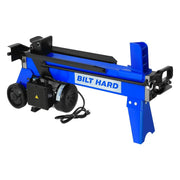
The BILT HARD 6.5-Ton Electric Log Splitter gives a useful real product reference. Its current specifications list 6.5 tons of force from a 15A motor with capacity for logs up to 20.5 inches long and 9.8 inches in diameter. For a homeowner preparing small batches within that capacity, an electric unit also removes gasoline fueling from the routine.
Moving beyond the listed log size should lead you to another model rather than relying on the tonnage number alone.
18 to 27 Ton for Regular Firewood
This middle range suits buyers whose firewood changes from load to load but does not routinely consist of oversized, difficult rounds. A 20-ton machine provides considerably more available force than the small electric class while remaining within a common residential range.
The BILT HARD LOG-X 20-Ton Gas Log Splitter uses a 209cc OHV engine and delivers 20 tons of rated force. It can process logs up to 21 inches long with an approximately 7-second cycle. The unit can also be towed behind compatible ATVs or UTVs within the manufacturer's stated towing conditions.
This makes the machine a useful example of what changes when you move out of the compact electric class. The purchase decision should still come back to the wood dimensions you need to process.

30 to 40 Ton and Above for Tougher Splitting Jobs
More than 30 tons starts to make sense when difficult rounds are part of the normal workload rather than rare exceptions.
The keyword here is regular. If a 30-inch awkward round appears once in a season, it does not automatically justify choosing the entire machine around that one piece. Buyers who repeatedly process large hardwood have a much clearer reason to consider this class.
Higher force also does not tell you whether the machine will fit your storage area or be convenient to move. Check the complete specification sheet before treating extra tonnage as an upgrade.
FAQs
Can a Log Splitter Be Too Powerful?
Yes. Extra tonnage may add cost or machine size without improving your normal work. Select enough force for the logs you regularly process, then use the manufacturer's rated capacity to confirm the fit.
Is Log Splitter Tonnage the Same Across Brands?
The rating uses the same unit of force, but machines with similar tonnage can have different log capacities or operating speeds. Compare the complete specifications rather than treating tonnage as the only measurement.
How Do I Know If My Log Splitter Is Too Small?
Repeated difficulty with normal logs is a warning sign. Check those rounds against the manufacturer's rated dimensions first. If they are within specification and the machine still struggles, consult the manual or manufacturer before moving to a larger model.
Can You Use a Log Splitter Indoors?
Never operate a gasoline-powered splitter inside a building or partially enclosed area. CDC and NIOSH warn that carbon monoxide from gasoline engines can build up rapidly and become fatal. For an electric model, follow its manual and electrical safety requirements.
Conclusion
Choose a log splitter by working backward from the wood you normally process. Small household rounds may fit a 6.5 to 14 ton machine. An 18 to 27 ton model covers a broader middle range, while larger or consistently difficult wood can justify moving into the 30 ton class or higher. These are selection ranges rather than universal capacity rules.
Measure your logs before comparing products. Once you know the size and species that appear regularly, the manufacturer's rated capacity gives you the final check. The result is a splitter sized for the work you actually do, without buying extra force simply because a larger number is available.
You can compare available log splitters after you know the tonnage range that fits your normal supply.