Choose reliable BILT HARD air compressors for automotive work, pneumatic tools, painting, woodworking, and demanding garage projects. With options ranging from 30 to 80 gallons and up to 180 PSI, these air compressors deliver the airflow and pressure needed for impact wrenches, spray guns, sanders, tire service, and other jobs that require steady compressed air.
A good air compressor should provide about 90-150 PSI. Around 90 PSI is enough to operate many pneumatic tools, while a higher PSI gives you more stored air and flexibility for demanding jobs.
In an automotive workspace, compressed air can also support jobs performed alongside a tire changer for more complete tire maintenance.
A 6-gallon oil-free pancake compressor usually offers the best value. It commonly costs about $100–$300 and handles most inflation, fastening, and light DIY tasks without taking up much storage space.
You do not need an air compressor at home, but it is useful if you regularly inflate tires, clean equipment, or complete painting projects. For occasional tire inflation only, a small portable inflator may be sufficient. For more involved vehicle maintenance, a car lift can provide easier access underneath the vehicle.
Consider these core factors:
CFM and PSI: Make sure the air compressor can meet the airflow and pressure required by your tools.
Tank size: Small tanks suit inflation and nailers, while larger tanks support longer tool use.
Power source: Electric models work well in garages; gas-powered models suit outdoor areas without electricity.
Pump type: Oil-free pumps need less maintenance, while oil-lubricated pumps are better for frequent or heavy use.
For most home tasks, choose a compressor with a 6–20 gallon tank and at least 2–5 CFM at 90 PSI. A 6-gallon model suits tires and nailers, while a 20–30 gallon model is better for impact tools and occasional spraying. Choose a 60-gallon or larger model only for frequent, continuous workshop use.



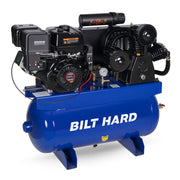


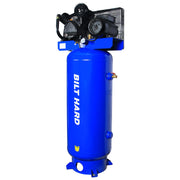



 30-Gallon 13.5HP 2-Stage Gas Air Compressor | BILT HARD$1,599.99

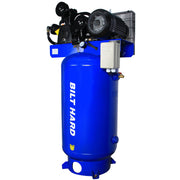
 60-Gallon 5HP Vertical 2-Stage Air Compressor | BILT HARD$1,699.99