A BILT HARD pressure washer makes it easier to remove dirt, mud, grime, and stubborn buildup from driveways, patios, decks, vehicles, siding, outdoor equipment, and other surfaces. Choose from electric and gas-powered options for everyday home cleaning or more demanding jobs, with models ranging from compact residential units to high-output machines delivering up to 4000 PSI and 4.0 GPM for faster, deeper cleaning.
A good GPM for a pressure washer is 1.2 to 2.5 GPM. It is enough for cars, furniture, and small patios, while 2.0–2.5 GPM cleans driveways, decks, and larger areas faster. Higher GPM provides more water flow to rinse away loosened dirt.
BILT HARD pressure washers range from electric options delivering up to 1.7 GPM to gas models around 2.5–2.6 GPM, and commercial-duty machines reaching 4.0 GPM. This makes it easier to choose water flow based on the size and intensity of the cleaning job.
Most homeowners need a 2,000–3,000 PSI pressure washer.
1,500–2,000 PSI for cars, windows, and outdoor furniture
2,000–2,800 PSI for siding, fences, and decks; and
2,800–3,000 PSI for concrete or heavily stained driveways
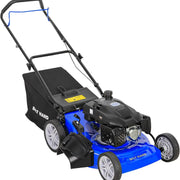
Always start with a wider nozzle and lower pressure on delicate surfaces. For seasonal yard care beyond outdoor cleaning, lawn mowers can help with tasks such as mowing, trimming, clearing debris, and general property maintenance.
Neither is always better; pressure washers need the right balance of PSI and GPM.
PSI: Measures water force. Higher PSI helps break up tough dirt, paint, grease, and stains.
GPM: Measures water flow. Higher GPM rinses dirt away faster and covers larger areas more efficiently.
Usually, a 3500 PSI, 2.5–2.6 GPM gas pressure washer is a practical choice. Consider these key factors for pressure washers:
PSI and GPM: Choose a balanced combination of cleaning force and water flow.
Power source: An electric pressure washer is quieter and easier to maintain, while a gas pressure washer offers more power and mobility.
Accessories and reach: Check the nozzles, detergent system, hose length, cord length, and available attachments.
Build and support: Consider portability, storage, warranty coverage, and replacement-part availability.



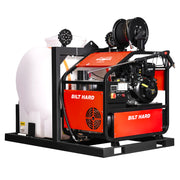



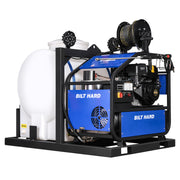

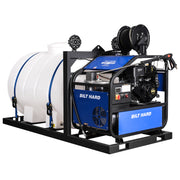


 BILT HARD 4000 PSI 4.0 GPM Hot Water Pressure Washer Skid, 171 Gal Tank, 14HP Vanguard Engine$4,499.99
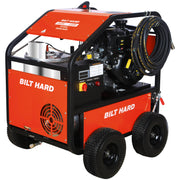
 BILT HARD 4000 PSI Gas Hot Water Pressure Washer - Signature Blue, 15 HP 420cc Engine, 4 GPM Commercial Power Washer with E-Start$2,899.99
 BILT HARD 4000 PSI 4.0 GPM Hot Water Pressure Washer Skid, 264 Gal Tank, 14HP Vanguard Engine$4,899.99
 BILT HARD 4000 PSI Gas Hot Water Pressure Washer - Signature Orange, 14 HP Briggs & Stratton Engine, 4 GPM Power Washer with AR Pump$3,599.99
 BILT HARD Hot Water Pressure Washer Skid, 4000 PSI 4.0 GPM, 171-Gal Tank, 15HP RATO R420 Engine$3,899.99
 BILT HARD Hot Water Pressure Washer Skid, 4000 PSI 4.0 GPM, 264-Gal Tank, 15HP RATO R420 Engine$4,199.99