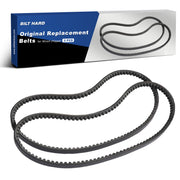
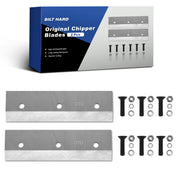
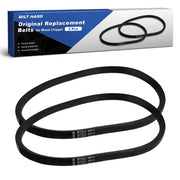
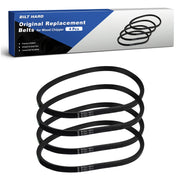
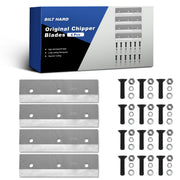
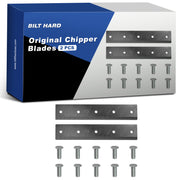
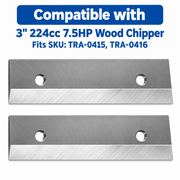
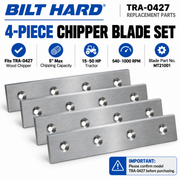
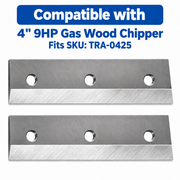
Keep your wood chipper working efficiently with replacement chipper parts designed for routine maintenance and worn-component replacement. From chipper blades to drive belts, the right components help restore cutting performance, reduce unnecessary downtime, and keep your machine ready for branches, yard debris, and regular property cleanup.
There is no fixed replacement interval. A common service point is every 25–50 operating hours to inspect, rotate, or sharpen them; replace the blades sooner if they are cracked, badly nicked, or worn beyond safe sharpening limits.
When buying chipper parts, check these points:
OEM: Uses the original manufacturer's brand, logo, and official part number.
Aftermarket: Uses a third-party brand and its own SKU or cross-reference number.
Packaging: OEM parts usually come in manufacturer-branded packaging; aftermarket parts use the supplier's packaging.
Catalog listing: OEM numbers can normally be verified in the manufacturer's official parts catalog.
A8 tool steel is a strong choice for wood chipper blades because it offers a good balance of toughness, impact resistance, and wear resistance. This makes it well suited to demanding wood chipper parts such as cutting blades.
The three common belt types used in wood chippers are flat belts, V-belts, and timing belts.
Flat belts: Smooth belts used for efficient power transfer over longer distances.
V-belts: Fit into V-shaped pulley grooves and provide strong grip with minimal slipping.
Timing belts: Use teeth that engage matching pulleys to keep shafts synchronized.