Lift, service, and store vehicles with BILT HARD car lifts built for home garages, workshops, and automotive maintenance. Choose a 2-post car lift for easier access to wheels, suspension, and the vehicle's underside, or a 4-post car lift for stable drive-on lifting and vehicle storage. From routine repairs to long-term garage storage, find the right one for safer and more efficient vehicle maintenance.
A 2-post car lift is better for vehicle repairs, while a 4-post car lift is better for storage, stability, and easier home use.
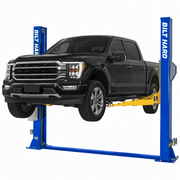
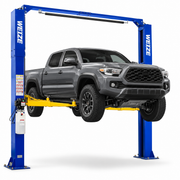
2-Post Car Lift: Offers open access to wheels, brakes, suspension, and the vehicle's underside while taking up less floor space. It is ideal for repair shops, DIY mechanics, and maintenance tasks that require full underbody access.
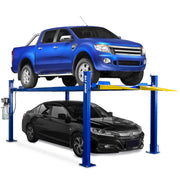
4-Post Car Lift: Provides a stable platform with easy drive-on operation and better long-term storage capability. It is best for home garages, vehicle storage, classic cars, and maintenance.
For most homeowners, a properly installed four-post car lift with automatic mechanical locks is the safest option. It provides stable wheel-based support and is easier to position than a two-post lift.
BILT HARD offers an 8,500-lb four-post car lift designed for home garages, with 10 built-in locking positions and a single-point safety lock release for secure and convenient operation.
Consider the following factors when comparing car lifts:
Lift type: 2-post for repairs, 4-post for storage, and portable lifts for occasional maintenance.
Capacity and size: Ensure the lift supports your vehicle weight, dimensions, wheelbase, and clearance.
Garage requirements: Check ceiling height, floor strength, available power supply, and whether you need an air compressor for pneumatic automotive tools.
Safety features: Look for mechanical locks, reliable support systems, clear instructions, and proper installation.
For most home garages, a 4-post car lift is the best overall choice because it offers stable wheel support, works well for both vehicle storage and routine maintenance, and is generally easier for homeowners to use.
A vehicle can normally remain on a 2-post car lift for a period, but don’t use it in the long term. It is mainly designed for repair work rather than storage because the vehicle is supported by lifting arms and requires precise positioning. For extended storage, a 4-post car lift is usually the better option.
If the garage is also used for tire replacement and balancing, a tire machine and balancer combo can complement the lift for routine wheel service.
A home car lift generally costs $1,000–$12,000. Professional installation, electrical work, freight, concrete preparation, and permits are usually additional expenses.
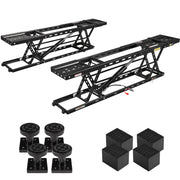
Portable or mid-rise lift: Approximately $1,000–$4,000. Suitable for low ceilings, occasional maintenance, detailing, tire work, and home garages.
Two-post lift: About $2,200–$6,500 for common 9,000–12,000 lb models. Premium commercial models may cost more.




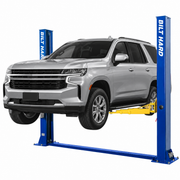





 WEIZE Series 8,500 lbs 4-Post Car Lift with Caster Kits – Durable Auto Storage & Parking Lift for Home Garage$2,849.99
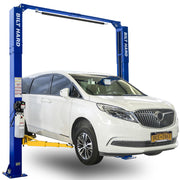
 BILT HARD 11,000 lbs Two-Post Car Lift with 220V 3HP Motor & Double Lock Release – Ideal for Auto Shops, Trucks & Garages$2,199.99
 BILT HARD 8,500 lbs 4-Post Car Lift with Caster Kits – Durable Auto Storage & Parking Lift for Home Garage$2,849.99