Move soil, gravel, mulch, debris, and other heavy materials with a BILT HARDdumper built for demanding jobs. From electric models for quieter, convenient hauling to tracked gas-powered dumpers for rough or uneven terrain, these machines help reduce manual effort across construction sites, farms, landscaping projects, and large properties.
A dump cart carries soil, gravel, mulch, tools, or debris in a wheeled bed. After reaching the unloading point, the user releases a latch or activates a hydraulic system, allowing the bed to tilt and dump the material.
For lighter yard work and everyday hauling, a garden cultivator is the practical option for moving mulch, soil, firewood, and landscaping materials.
A dumper is used to transport and unload loose or heavy materials, such as soil, sand, gravel, concrete, and construction waste. Its compact design makes it useful for landscaping, farming, construction, and property maintenance, especially where larger trucks have limited access.
BILT HARDdumpers include electric and tracked gas-powered options designed to carry heavy loads more efficiently than a standard wheelbarrow. For larger landscaping and property-maintenance projects, users can also explore BILT HARD’s lawn mowers.
Dumpers can be grouped by their drive system and tipping design:
Tracked mini dumper: Uses rubber tracks for mud, slopes, rough ground, and narrow job sites.
Wheeled dumper: Travels faster on firm ground and is suitable for general construction and landscaping.
Front-tip dumper: Unloads directly in front and is useful for moving large amounts of material.
Swivel-tip dumper: Rotates and unloads to either side, making it suitable for trench backfilling and confined areas.
High-tip dumper: Raises the bed before tipping, allowing material to be emptied into dumpsters, trailers, or larger containers.
A mini dumper commonly holds about 1,100 to 3,300 pounds, depending on its size and design. Smaller electric models may carry around 1,100 pounds, while larger tracked machines can handle heavier loads.
For example, BILT HARD currently offers both an electric mini dumper and a gas-powered tracked dumper with a 1,100-pound load capacity, making them suitable for moving soil, gravel, debris, and other heavy materials around job sites and properties.
The main differences are size, carrying capacity, mobility, and road use.
Mini dumper: Offers a smaller load capacity, tight turning, and better access to gardens, farms, narrow paths, and construction sites. Tracked models also perform well on mud and uneven ground.
Dump truck: Provides a much larger bed and payload for transporting soil, aggregates, demolition waste, and other bulk materials between job sites or over public roads.



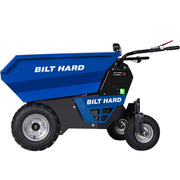 1100Lbs Loading Electric Dumper Cart, 48V Battery Powered Wheel Barrow Electric Mini Dumper$1,799.99
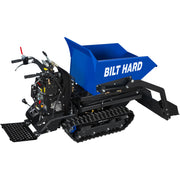 BILT HARD 1100lbs Capacity Tracked Wheelbarrow – 302cc Gas Powered Dumper w/ Electric Start$3,199.99