Keep your yard looking clean and well-maintained with BILT HARD string trimmers and leaf blowers built for everyday outdoor tasks. From shaping grass edges and trimming overgrown areas to clearing leaves, clippings, and debris from lawns, sidewalks, and driveways, these tools help homeowners handle seasonal yard work faster and with less effort.
A battery string trimmer is better for most homeowners. Choose gas when you need longer runtime and more power for large properties or heavy overgrowth.
Battery models: Instant starting, low noise, no fuel storage, and minimal maintenance. Best for small to medium lawns, regular edging, and trimming around landscaping. Runtime and charging time are the main limitations. They also pair well with cordless lawn mowers for routine residential lawn care.
Gas models: Strong, sustained cutting power and quick refueling. Best for large yards, thick weeds, rough ground, and frequent heavy-duty work. However, they are generally louder, heavier, and require engine maintenance.
A lightweight cordless model is the easiest option. These string trimmers are well suited to beginners, routine lawn edging, and small to medium yards.
The BILT HARD 20V cordless string trimmer is a beginner-friendly option with automatic and manual line feed, an adjustable auxiliary handle, a telescopic shaft, and a pivoting head. It also converts to an edger, making it convenient for routine trimming and lawn edging around small to medium yards.
The best string trimmer for most homes is a 20V–40V cordless model with a cutting width of around 12–15 inches.
BILT HARD 20V 12" cordless string trimmer: Best for small lawns, routine edging, and light grass.
BILT HARD 40V 12" string trimmer: Better for medium-sized yards and thicker grass, with extra power for regular lawn maintenance.
BILT HARD 170cc 22" walk-behind string trimmer: Best for tall weeds, overgrown areas, uneven ground, and heavier cutting.
Usually, a 20V–40V string trimmer provides enough power. Choose higher voltage or gas power for thicker weeds, larger yards, or heavier cutting.
20V battery: Small yards, lawn edges, and light grass.
40V battery: Most residential yards up to approximately 1/2 acre.
56V–80V battery or 21–30cc gas: Medium to large yards, thicker grass, and heavier weeds.
Most residential string trimmers cost from $25 to over $600, with the average spending about $100–$300. Basic models cost less, while brushless motors, larger batteries, wider cutting paths, and self-propelled systems increase the price
Corded electric: $40–$100 — suitable for small yards near a power outlet.
Battery-powered: $100–$350 — suitable for most residential lawns; kits with batteries and chargers cost more.
Gas-powered: $150–$400 — suitable for large yards, thick weeds, and longer trimming sessions.
Walk-behind models: $400–$1,200 — suitable for tall grass, rough terrain, and heavily overgrown areas.
Before buying a leaf blower, consider:
Power source: Battery, electric corded, or gas models based on your yard size and usage needs.
Air power: Check MPH and CFM to match the amount of leaves and debris you need to move.
Weight and comfort: Choose a lightweight model for longer use.
Noise level: Consider quieter options for residential areas.
Extra features: Look for variable speed control, mulching, or vacuum functions if needed.
For most homeowners, a leaf blower with 400–600 CFM and 100–150 MPH is powerful enough. Small yards need less power, while large properties or wet, heavy leaves require higher CFM and stronger airflow.
CFM (Cubic Feet per Minute): Measures how much air moves. Higher CFM is better for clearing piles of leaves and large areas.
MPH (Miles per Hour): Measures air speed. Higher MPH helps break loose wet leaves, dirt, and heavier debris.
Choose higher CFM for large yards and higher MPH for tougher debris. The best leaf blowers balance both for your cleanup needs.



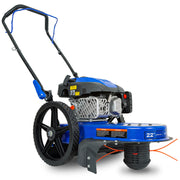


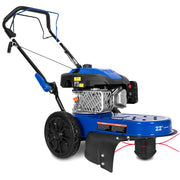




 BILT HARD 22" Self-Propelled String Trimmer, 170cc Gas Engine, 10" Flat-Free Wheels$479.99