The safest way to start a log splitter is to inspect it on level ground, place the hydraulic control in neutral, and follow the startup sequence in your model’s manual. A gas machine needs the correct fuel-valve, choke, switch, and recoil-start settings. An electric machine needs a grounded power source that can supply its rated load.
Before using the machine, put on eye protection, gloves, hearing protection, and sturdy footwear. Keep others outside the work area. Start a gasoline model only outdoors because small engines can produce dangerous carbon monoxide even in partly enclosed spaces, according to NIOSH guidance.
What Should You Check Before Starting?
Read the manual before starting any log splitter. Park on firm, level ground, secure the wheels, and clear the beam while following essential log splitter safety tips, such as checking your protective gear, inspecting the machine for visible damage, and keeping the work area clear. You should also know how to stop the machine quickly before turning it on.
Check Engine Oil and Hydraulic Fluid
For a gas splitter, check the engine oil and hydraulic reservoir with the machine level and the engine off.
Read the dipstick as directed in the engine manual. Add oil only to the indicated range and avoid overfilling.
Use the dipstick or sight mark specified in the manual and add only the recommended hydraulic fluid. A low level can draw air into the system, causing noisy pump operation or uneven cylinder movement.
Look for Leaks or Damaged Hoses
Inspect hoses for cracks, kinks, abrasion, wet spots, or loose fittings. Do not start with a damaged hose or leaking connection.
Never feel for a hydraulic leak by hand. Pressurized fluid can penetrate skin. Shut down, relieve pressure, and use cardboard to locate a suspected leak. Get immediate medical care for any injection injury.
Make Sure the Controls Move Freely
With power off, identify neutral, extend, and retract. Confirm that the lever is not bent or binding. A gas model’s control must be neutral before startup.
Check guards and fasteners. If the switch cannot stop the machine reliably, take it out of service. Never defeat a two-hand control or tie down a lever.
How to Start a Gas Log Splitter
Set fuel, choke, ignition, and throttle in the manual’s sequence. Work outdoors, away from ignition sources. Never refuel a running or hot engine.
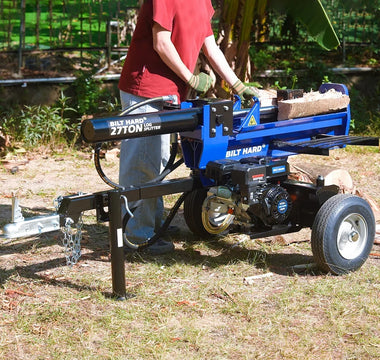
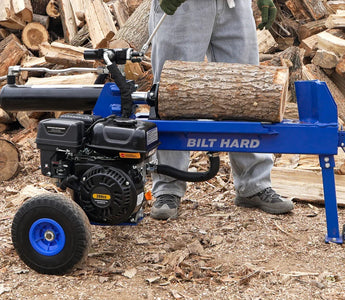
The BILT HARD LOG-X Series 18-Ton Gas Log Splitter keeps the starting process easy to follow with clearly identified controls for the engine switch, fuel shutoff valve, choke, throttle, and recoil starter. Gas power makes it practical for yards or wooded areas where a suitable electrical outlet is not available.
Step 1: Open the Fuel Valve and Set the Choke
Confirm that the hydraulic control lever is in neutral. Open the fuel shutoff valve, then move the choke to CLOSED or START for a cold engine. A warm engine may need partial choke or no choke, depending on its design.
Some engines combine these controls or use different labels. If the sequence in your engine manual differs from this general procedure, use the sequence in the manual.
Step 2: Turn the Engine Switch On
Move the engine switch to ON. Set the throttle to the starting position shown in the engine manual, which is often between idle and FAST. Keep the hydraulic lever in neutral and make sure nobody is touching the log.
Step 3: Pull the Starter Cord
Stand securely. Pull slowly until compression increases resistance, let the cord return, then pull quickly. Guide the handle back instead of releasing it.
Do not yank the rope to its limit or wrap it around your hand. If it stops abruptly, disable the ignition and arrange an inspection.
Step 4: Move the Choke to Run
Once the engine fires, move the choke gradually toward OPEN or RUN. A closed choke can cause rough running or a stall. Set the operating throttle after the engine runs smoothly.

How to Start an Electric Log Splitter
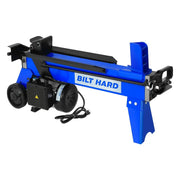
An electric log splitter does not require gasoline, a choke, or a recoil cord, which removes several steps from startup. The BILT HARD 14-Ton Electric Log Splitter starts through a clearly identified power switch after its 120V, 15A motor is connected to a suitable grounded supply.
Its straightforward controls let the operator check the hydraulic system with an unloaded cycle before placing wood on the beam, helping make each startup simple and controlled.
Step 1: Connect the Correct Power Supply
Use a grounded outlet, and never modify the plug. Outdoors, the U.S. Consumer Product Safety Commission recommends an undamaged outdoor-rated cord and GFCI protection.
If an extension cord is permitted, use the wire gauge and maximum length specified by the log splitter manufacturer. An undersized or excessively long cord can reduce the voltage reaching the motor and may cause overheating.
Step 2: Turn On the Power Switch
Block the wheels, secure the support leg, and stand in the designated operator zone. Press the switch. If the breaker trips, the cord becomes hot, or the motor hums without normal movement, switch off and unplug the splitter. Do not keep resetting an unresolved overload.
Step 3: Test the Controls Before Splitting
Run one controlled extend-and-retract cycle with no load. Motion should be smooth. If it remains erratic, stop and check the fluid, connections, and do the purge procedure.
Return the control to neutral and retract the pusher before loading wood. Place the log along the grain and handle it from the sides. Never put a hand between the log and wedge, and do not load wood while the pusher is moving.
What if Your Log Splitter Won't Start?
Start with external checks. Switch off or unplug the machine before touching any components. Do not open hydraulic lines, bypass safety controls, or disassemble a recoil starter unless you are qualified to do so.
Check for Fresh Fuel First
Confirm that the correct fuel is fresh and the shutoff valve is open. Old gasoline can restrict the carburetor. Follow the manual’s instructions when draining or replacing stored fuel.
Make Sure the Choke Is Set Right
A cold engine usually needs a closed choke, while a warm engine may not. If it fires and struggles, begin opening the choke. Recheck the throttle and neutral positions.
Check the Spark Plug Connection
With the switch OFF and the engine cool, make sure the spark plug boot is fully seated. A loose or disconnected wire can prevent the plug from producing the spark needed for ignition.
Look for Carburetor or Starter Problems
If the fuel and plug connection check out, a restricted carburetor, fouled plug, or failed recoil starter may be responsible. Follow the engine manual’s troubleshooting procedure and use professional service when fuel-system or starter parts require removal.
For an electric unit, check the outlet, plug, cord, GFCI, and breaker. Unplug before resetting the machine. If the protection trips again, stop and correct the fault.
Stop if the Pull Cord Feels Locked
Do not force a locked recoil cord. Kickback can injure your arm, and a hard stop may signal an engine or pump problem. Move the switch to OFF, close the fuel valve, relieve pressure as directed, and arrange an inspection.

FAQs
Can You Start a Log Splitter With Low Hydraulic Oil?
No. Low fluid can introduce air, cause erratic cylinder movement, and damage the pump.
Why Does a Log Splitter Start Then Shut Off?
Common causes include leaving the choke closed, stale fuel, restricted fuel flow, a loose plug wire, or an engine-protection shutdown. Recheck the start settings first, then follow the model’s troubleshooting chart.
How Long Should a Log Splitter Warm Up?
Wait until the engine runs smoothly with the choke open and the unloaded cylinder moves normally. There is no universal time.
Can You Leave Gas in a Log Splitter?
Only if the engine manual allows it. For extended storage, add fuel stabilizer or drain the system as directed. Close the fuel valve and store the machine away from flames, sparks, and pilot lights.
Should the Wedge Be Retracted Before Starting a Log Splitter?
Yes. Use the normal home position and put the control in neutral. A retracted pusher protects the cylinder rod and provides a predictable unloaded test before wood is placed on the beam.
Conclusion
Safe startup begins before the engine or motor turns. Check both oil systems, inspect every hose, secure the machine, and verify neutral. Then use the gas or electric sequence specified in the operator’s manual.
After startup, wait for smooth power and test one unloaded hydraulic cycle. If the cord locks, fluid leaks, controls bind, or electrical protection trips again, shut down and correct the fault before splitting wood.