Keep your workspace, garage, outdoor area, or large room comfortable with BILT HARD floor fans designed for powerful airflow, durability, and flexible cooling performance. Built with high-velocity motors and heavy-duty designs, these fans deliver strong air circulation to move heat, improve ventilation, and create a more comfortable environment. Explore our collection of high-performance floor fans built for everyday use, demanding work environments, and reliable airflow in any space.
No. Most household floor fans use roughly 25–100 watts, while larger high-velocity industrial models may use 100–200 watts or more. Actual consumption depends on the motor, fan size, and speed setting, so check the product’s wattage label for an accurate figure.
For energy-conscious cooling, BILT HARD floor fans are designed to move a high volume of air without the power demand of an air conditioner. Many options include multiple speed settings, so you can reduce the fan speed when maximum airflow is not needed and avoid unnecessary electricity use.
Neither is always better. A floor fan is better for strong, focused airflow, while a standing fan is better for circulating air across a wider area at body height.
Floor fan: Powerful airflow, adjustable angle, and easy portability. Best for garages, workshops, gyms, basements, and job sites.
Standing fan: Adjustable height and oscillation distribute air around the room. Best for bedrooms, living rooms, and offices.
Floor fans are useful for improving airflow, cooling large or poorly ventilated spaces, and moving air where needed. Common uses include:
Cooling garages, workshops, gyms, basements, and job sites
Improving ventilation by moving fresh air through doors and windows
Helping dry damp areas, floors, or paint faster
Providing portable cooling for outdoor spaces such as campsites
A high-velocity metal floor fan is usually the best option because it provides powerful airflow, durable construction, and adjustable air direction. The best type still depends on the space and cooling needs.
High-velocity floor fan: Best for garages, workshops, gyms, and large rooms that need strong airflow.
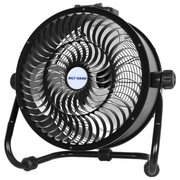
Portable floor fan: Easy to carry between job sites, patios, campsites, and indoor work areas.
Rechargeable floor fan: Best for outdoor use or locations without convenient electrical outlets.
Misting floor fan: Adds a fine water mist for patios, outdoor events, and hot, dry environments.



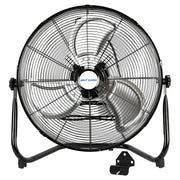


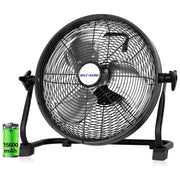

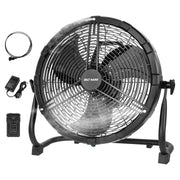

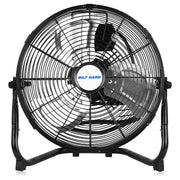

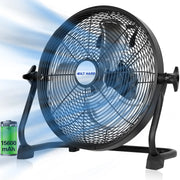


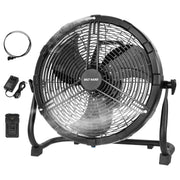


 BILT HARD 16" Rechargeable Outdoor Floor Fan: 15600mAh Battery, High Velocity, All-Day Run, USB Output$129.99

 BILT HARD 12" Rechargeable Outdoor Floor Fan - High Velocity, Portable, All-Day Run$79.99