Stay cool and keep air moving with BILT HARD standing fans built for garages, workshops, patios, and other spaces that need powerful circulation. Choose a pedestal fan with adjustable height, multiple speed settings, and high-velocity airflow to direct air where you need it most. From oscillating models for wider coverage to heavy-duty industrial options for demanding work areas, find the right one for flexible, efficient cooling.
The best pedestal fan is generally an 18- to 20-inch oscillating one with multiple speeds, adjustable height, and tilt control. For demanding conditions, also consider motor power, construction quality, and whether the fan is rated for outdoor use.
BILT HARD pedestal fans are designed for these higher-airflow applications, with options for indoor workspaces and outdoor cooling. Choose based on the size of your space, required airflow, and whether outdoor use or misting is needed.
A 3-blade fan is generally better for stronger, more direct airflow, while a 5-blade fan often provides smoother and more evenly distributed air. However, blade shape, motor power, RPM, and grille design usually affect performance more than blade count alone.
3-Blade Pedestal Fan: Provides stronger airflow, lower air resistance, and easier maintenance. It is ideal for garages, workshops, patios, porches, home gyms, basements, and larger rooms.
5-Blade Pedestal Fan: Delivers smoother airflow and a more consistent breeze at lower speeds. It suits bedrooms, living rooms, home offices, and dining areas.
No. Most pedestal fans use about 45–100 watts, depending on their size, motor, and speed setting. Larger high-velocity models may use 100–200 watts or more.
For garages, workshops, warehouses, and patios, BILT HARD pedestal fans provide high-volume airflow without relying on compressor-based cooling. Using a lower fan speed when maximum airflow is not required can also help reduce electricity use.
Airflow and size: Check the CFM rating and fan size to ensure enough cooling coverage.
Adjustability and control: Look for multiple speeds, oscillation, adjustable height and tilt, timers, or remote controls.
Noise and motor quality: Choose a quiet, reliable motor for long-term use.
Build and stability: Consider durable materials, a stable base, and proper outdoor ratings.
Safety: Check for features such as protective grilles and recognized safety certifications.
The quietest standing fans usually use a DC or brushless motor, balanced blades, and several low-speed settings. For quiet environments, look for a published noise rating of about 35–45 dB on the lowest setting. Larger metal or high-velocity fans may produce more sound because they are designed to move more air. Drum fans for larger workshops and garages are also good quiet choices.



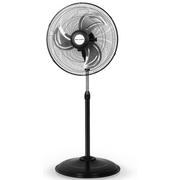



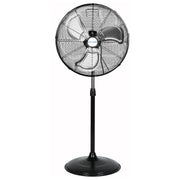

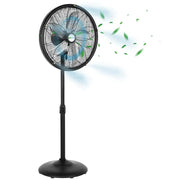

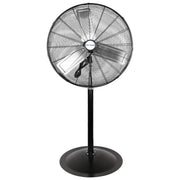


 BILT HARD 30" High-Velocity Industrial Pedestal Fan - 3-Speed, Adjustable Height, Aluminum Blades$199.99
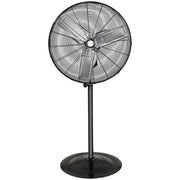
 BILT HARD 24" High-Velocity Pedestal Fan: 6450 CFM, 3-Speed, Heavy-Duty Industrial Standing Fan$199.99