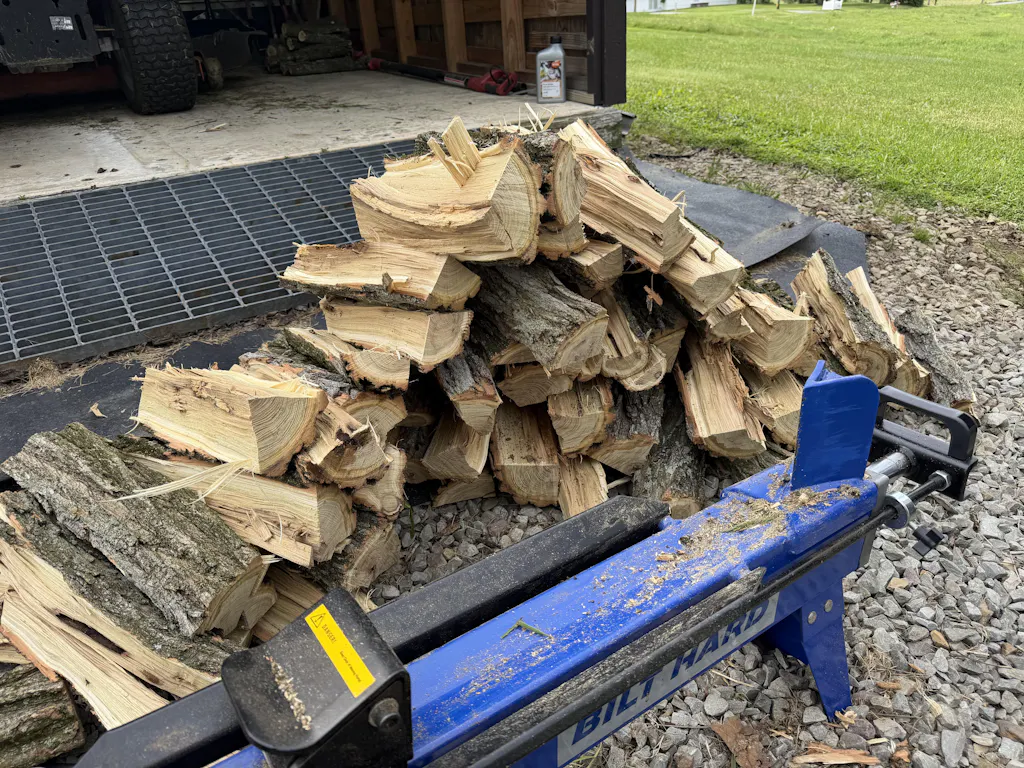
If you heat your home with firewood, maintain a rural property, or run a small landscaping or firewood business, choosing the right log splitter tonnage matters far more than brand hype or marketing buzzwords.
A splitter that’s too small wastes time and energy. One that’s oversized often costs more than you’ll realistically ever need. This guide breaks things down clearly—homestead vs. professional use, electric vs. gas, horizontal vs. vertical—using real-world scenarios and practical expectations.
Whether you’re comparing a 6.5-ton electric log splitter, a 20-ton gas splitter, or stepping into 30–40 ton professional machines, this guide is designed to help you choose with confidence.
How Does a Log Splitter Work? (Quick Beginner Overview)
A hydraulic log splitter uses pressurized fluid to push a steel ram against a log, forcing it through a fixed wedge. The force applied is measured in tons, which represents how much splitting pressure the machine can generate.
Key components include:
-
Engine or electric motor
-
Hydraulic pump
-
Hydraulic cylinder (ram)
-
Control valve
-
Splitting wedge
More tonnage means more force—but it also brings more weight, higher cost, and greater fuel consumption, which is why matching capacity to actual use matters.
Types of Log Splitters (Electric vs. Gas, Horizontal vs. Vertical)
Electric Log Splitters (Typically 5–7 Tons)
-
Plug into a standard 120V household outlet
-
Quiet operation and low maintenance
-
Best for small logs and light, seasonal use
Gas Log Splitters (20–40+ Tons)
-
Powered by gasoline engines
-
Fully mobile and off-grid capable
-
Designed for large, knotty, or dense hardwood rounds
Horizontal vs. Vertical Log Splitters
-
Horizontal: Faster and more efficient for small-to-medium logs
-
Vertical: Safer and easier for heavy rounds you don’t want to lift
Many mid- to high-tonnage models—such as those commonly found in the BILT HARD lineup—offer horizontal/vertical operation, giving users flexibility as log size and workload increase.
Homestead Use: What Tonnage Is Enough?
6.5-Ton Electric Log Splitter — Light-Duty, Occasional Use
A 6.5-ton electric log splitter is a solid choice for:
-
Small properties
-
Backyard fire pits
-
Softwoods like pine or spruce
-
Pre-cut logs under ~10 inches in diameter
What it does well
-
Easy to store
-
Minimal maintenance
-
No gas, fumes, or cold-start issues
-
Garage-friendly and beginner-friendly
Limitations
-
Struggles with knotty hardwood
-
Not suitable for large or irregular rounds
-
Slower cycle times
Best for: Homeowners splitting a few cords per year and upgrading from an axe or maul.
20-Ton Gas Log Splitter — The True Entry Point for Serious Homesteads
A 20-ton gas log splitter is often considered the sweet spot for:
-
Mixed hardwoods (oak, maple)
-
Logs up to ~18 inches in diameter
-
Seasonal firewood production
This category is frequently searched as:
-
Log Splitter 20 Ton
-
Log Splitter Gas
-
Log Splitter Hydraulic
Why 20 tons works
-
Handles the majority of residential firewood
-
Gas-powered portability
-
Faster and more forgiving than electric models
If you’ve ever rented a splitter from Lowe’s or a local equipment rental shop, it was likely close to this range.
Stepping Up: Advanced Homestead to Semi-Professional Use
25–30 Ton Log Splitters — Where Power Meets Versatility
A 25-ton or 30-ton log splitter is ideal if:
-
You heat primarily with wood
-
You split 5–10 cords per season
-
You regularly deal with knotty or twisted hardwood
Key advantages
-
Horizontal/vertical operation
-
Larger hydraulic cylinders
-
Higher productivity per session
A 30-ton full-beam splitter adds noticeable frame rigidity, which helps when splitting oversized rounds or wood with uneven grain.
Professional & Commercial Use: When Tonnage Really Matters
35–40 Ton Log Splitters — Built for Volume, Not Occasional Use
For professionals, tonnage isn’t about bragging rights—it’s about time saved per cord and consistency over long work sessions.
A 35-ton or 40-ton gas log splitter is typically used for:
-
Firewood businesses
-
Farm and ranch operations
-
Weekly or near-daily workloads
-
Large-diameter hardwood (elm, hickory, oak)
What Separates 35–40 Ton Commercial-Class Splitters
Beyond full-beam steel construction and large-displacement engines, experienced buyers look for durability indicators, such as:
-
Thicker steel beam and wedge assemblies to reduce flex under repeated high loads
-
Heavy-duty hydraulic cylinders designed for continuous pressure cycles
-
Commercial-style hydraulic layouts with high-quality hoses and fittings
-
Longer-term expectations for hydraulic system reliability over multiple seasons
In this range, machines like BILT HARD’s 35- and 40-ton models are typically chosen not just for peak force, but for their ability to hold up under sustained workload, which matters more than spec-sheet numbers alone.
Log Splitter Model & Application Comparison
| Model / Tonnage | Power & Key Specs | Maximum Log Size | Typical Applications & Users |
|---|---|---|---|
| 6.5-Ton Electric | 15-Amp electric motor, approx. 1.75 HP; ~18-second cycle time; horizontal design; includes stand | 20.5″ length × 9.8″ diameter | ✴️ Light-duty residential use ✴️ Softwood & small to medium logs ✴️ Fire pits and basic fireplace needs |
| 20-Ton Gas | 7 HP 209cc OHV gas engine; ~7-second cycle time; towable design | Up to 21″ length | ✴️ Typical home firewood use ✴️ Medium hardwood, seasonal splitting ✴️ Versatile all-around solution |
| 25-Ton Gas | 7 HP 209cc OHV engine; ~13.5-second cycle time; horizontal / vertical operation | Up to 24″ length | ✴️ Large homesteads ✴️ Hardwood logs (18–24″ diameter) ✴️ Light professional or higher-volume use |
| 30-Ton Gas | Approx. 7.5 HP 223cc OHV engine; fast ~11-second cycle time; horizontal / vertical design | Up to 24″ length | ✴️ High-volume residential users ✴️ Small farms or rural properties ✴️ Frequent hardwood splitting |
| 35-Ton Gas | 10 HP ~301cc OHV engine; ~16-second cycle time; horizontal / vertical operation | Up to 24″ length; handles heavy rounds (~100 lb) | ✴️ Heavy-duty splitting tasks ✴️ Year-round firewood production ✴️ Experienced users |
| 35-Ton Gas (with Hydraulic Log Lift) | 10 HP 306cc OHV engine with hydraulic log lift; optional multi-wedge capability | Approx. 24″ length × 20″ diameter | ✴️ Reduced lifting and strain ✴️ Large, heavy, or difficult logs ✴️ Ideal for high-volume or aging users |
| 40-Ton Gas | 13 HP 389cc OHV engine; ~16-second cycle time; horizontal / vertical; full-beam construction | Approx. 24″ length | ✴️ Maximum productivity ✴️ Extremely hard or oversized hardwood ✴️ Semi-professional and commercial use |
⚠️ Note: Maximum log diameter depends heavily on wood species, moisture content, and knot density—not just tonnage.
Buying Guide: Key Features to Consider
Before buying, think beyond tonnage:
1. Log Size & Wood Type
Dense hardwood with knots demands significantly more force than straight softwood.
2. Vertical Splitting Capability
If you handle heavy rounds, vertical mode saves time—and your back.
3. Cycle Time
For higher volumes, cycle time affects productivity more than peak tonnage.
4. Maintenance Requirements
-
Electric: minimal upkeep
-
Gas: engine oil, hydraulic fluid, and seasonal checks
5. Buying vs. Renting: A Practical Rule of Thumb
A clearer way to decide:
-
Rent if you split less than 2–3 cords per year or only work once a season
-
Buy if you split more than 3 cords annually, heat primarily with wood, or value working on your own schedule
Once annual volume crosses that threshold, ownership quickly becomes more economical—and far more convenient—than repeated rentals.
Safety & Compliance: A Critical Reminder for Heavy-Duty Equipment
Log splitters are powerful machines, and in North America, safety compliance and proper operation are essential, especially with 25-ton and larger units.
Key safety considerations include:
✔️ Protective Guards & Shields
Quality log splitters are designed with protective steel shielding around moving and hydraulic components. Always ensure guards are in place and never operate a splitter with missing safety covers.
✔️ Kickback & Log Control
While hydraulic splitters are safer than manual tools, log kickback can still occur, especially with knotty or irregular wood. Keep hands clear of the splitting zone and ensure logs are properly seated on the beam.
✔️ Operator Training Basics
-
Wear eye protection and gloves
-
Keep bystanders at a safe distance
-
Shut off the engine before clearing jams
-
Use vertical mode for heavy rounds instead of lifting
Brands like BILT HARD design their log splitters with stability and user safety in mind—but safe operation always depends on the operator.
Final Takeaway
The best log splitter isn’t the biggest one—it’s the one that matches your wood type, workload, and safety expectations.
From compact electric units to heavy-duty 35–40 ton gas splitters, choosing the right tonnage helps you work more efficiently, safely, and cost-effectively—season after season.